 Yesterday would have been my mother’s 87th birthday. She died shortly before her 85th. She kept saying that year, “I don’t think I’m gonna make it to my birthday.” She died at the end of June, 2 mos. before.
Just thinking of some ways to look at her life. She was born in 1922, our father in 1918, at the end of WWI, which her father fought in and spent time behind German lines. Her father, my grandfather, returned home on the day of his brother’s wedding. His jubilant arrival back in town and no one was there to meet him. In fact, it was like the Twilight Zone; he couldn’t find anyone! Someone told him they were at the church, so he found his way there and, as my grandma told it, “People spent more time gathering around him than the wedding couple, at the reception!”
My mother was the oldest of 3 children. Two brothers were born after her, but were quite a bit younger. It seems my mother was truly pampered to the extreme. They were POOR, however, in a 2-bedroom house, my mother got her own bedroom? Bizarre. They lived through the depression and my grandma told about stitching clothes together and re-doing them to make them fit. My grandpa worked tons of different odd jobs, at one point going to work for the WPA, which from the way grandma told it, was rather embarrassing. He worked as a car mechanic, a night watchman at Purdue, and many other jobs. They lived in one house on Morton St. their entire lives, my grandpa putting in the indoor bathroom and building the garage. They always had a beautiful flower garden in one corner of the yard.
My mother remembers taking baths in a tin tub in the middle of the kitchen floor, hot water boiled and poured into it for the scrubbing.
Raised in the Dutch Reformed Church, later named Christian Reformed (but most members, all of whom I was related to, had names like Huizenga, Wierenga, Plantenga, Vanderveen, Vanderwielen, to name a few). My father was raised Baptist, so when the 2 of them got together, to the horror of their parents, they decided to be Presbyterian.
In my mother’s era, a white, middle-class woman quit work when she got married. Though both quite poor growing up, my parents soon fit into middle class professional life with my father’s career in academia the center of their attention. My mother was quite a fast typist, always thinking she might return to that skill to earn some money, when her kids were raised. By the time she really considered it, her skills hadn’t been used in many years and computers soon became the norm.
My mother cooked and cleaned, every day, large, multi-roomed houses we lived in, as my father’s career soared. He ended up in many Who’s Who of Science and Engineering volumes. She kept house, and entertained friends. Many nights I watched my parents laugh and talk with friends, serving small dinners or snack food and many margueritas. My father often played Dixieland jazz, which he loved. On these evenings, he would laugh a lot, letting off steam from the stress of the job and his life. My sister and I would sometimes get asked to dance for their friends, something I never really wanted to do but was too young and immature to say no thanks, I don’t want to. We were shown off, cute little dolls to be paraded past their colleagues.
My parents, though, had true friends. Some of the couples were their true friends. I loved when my dad could relax and just spend time at home, be fun-loving and giving us lots of attention. Home was the gathering place — not some bar or restaurant downtown. My home with my dad was full of music, people, laughter, much of the time. Weekends would be football games and golf tournaments on tv. But my parents were home, enjoying themselves. Many Saturdays and weekday evenings, the dining room table would be strewn with academic papers of all sorts and my dad at one end of the table, working his way through them. He did this in his home, with kids and all of their problems running around him all the time. When I had a problem with homework, it was always okay to take it to him and interrupt his own work. He never refused. Never told me to go away, ever. Looking back now, that is amazing.
We all lost ourselves and who we were after his death. I can’t blame just my mother for the way it affected her — turning to alcohol. We all were completely lost without him and never recovered. But life goes on. And life is good. My mother then went back to work, in a Ponderosa steakhouse, where she wore short shorts and a cowboy hat; and then to a laundromat, where she stayed for 20-some years as the lady at the laundromat. They one day closed the place, with no warning whatsoever, and then she had a nervous breakdown of sorts, and spent a month in the hospital for depression.
In many ways, my mother was a totally amazing person, surviving her husband’s untimely, early death at age 50; overcoming alcoholism (eventually), never taking another drink after treatment; and then overcoming clinical depression to return home and be quite content in her home, with her cat, even when she was on oxygen 24/7 and became winded from walking from her living room to her kitchen. She stayed at home. She made peace with her God, prayed a lot and wrote in her journal — a tool she learned while in the hospital for the depression.
My difficult relationship w/ her was mostly due to her never-ending discontent with whatever it was that I did. When she was hospitalized for depression, I went there nearly every night for the month. But nothing was ever good enough from me, for my mom. For some peculiar reason, I was the one who never satisfied her. And I was the only one in town, my sister and brother having moved away many years before. Because of that, they never had the relationship with her that I did. But I am at peace knowing I did absolutely everything I could and beyond, especially in the last few years. Everything and beyond. I have no regrets.
So they were married 25+ years, then she survived another 35+ years without him. She dated some scuzzball men in those years, partly due to her ignorance of relationships, partly due to her own nievete, and her dependency on needing a man to tell her what to do. To a woman like my mom, a woman was never complete without a man. Men were to take care of women. She always expected that and never felt comfortable running a household without a man. Later this attitude somewhat transfered onto my little brother. It never mattered what I would say, but if JIM told her to do something — then it must be right. Not Jim’s fault but just the way she was. I remember a day she suddenly looked at me and said, “You know, lately I think that I just don’t even NEED a man!” I looked at her and said, “Well that’s good, mom, you are 80 years old.” 🙂
She loved Purdue basketball and would watch all the games on tv, upset w/ us if we didn’t. She always wanted me to come over and watch a game with her. She also watched the news and had her favorite news casters! She was really quite informed of everything going on in the world, from her own living room. She adored a new car and leased new cars to the end. Near the end of her life when she couldn’t go out for very long at a time, and wasn’t supposed to drive, she would literally get into her car in the garage, open the garage door, back the car down to the end of the driveway, get out of her car and get the mail, and drive it back into the garage.
So this was a stream-of-consciousness addition to my blog, 2 years after my mother’s passing. 3 of my nuclear family members are now in the next world, 3 of us still here, and one of them has no association with the other 2 of us. But I feel there is nothing I can do about it. 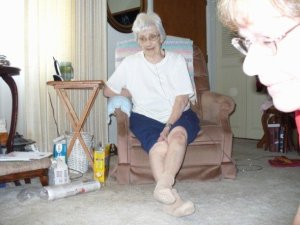

 It is almost comical to write about only 7 Bahai’s imprisoned in Iran, when in the past, when the Faith first began in the 1800s, 20,000 were executed by the govt. of Iran, all in the most inhumane ways you can imagine. We know their history because historians, sometimes European historians of that age and time, documented their fates and were appalled at the atrocity of their deaths. Some had holes cut into their chests where lit candles were then placed, as they were paraded through the streets where crowds of people would taunt them as enemies of the State. They were not, of course, but oppressive regimes always see any movements with growing numbers of followers as enemies. Was not Christ welcomed on Palm Sunday and then paraded and taunted with a crown of thorns the next week, crucified while the people laughed and jeered at Him?
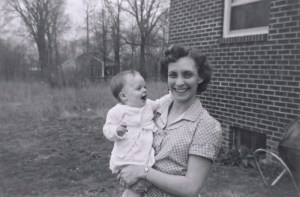 Circumstances of my birth: The year was 1953. I was a baby boomer baby. My father had not returned from WWII, however. He had a physical impediment which kept him from serving active duty. One of his legs was shorter than the other, due to a disease he had as a boy. I know that during WWII, he tested some kind of explosives at Purdue, where he was a grad student and new professor. I have photos of him doing this and I know it affected his hearing the rest of his life. My grandpa on my mother’s side served in WWI overseas and wrote a story about it, “21 Days Behind German Lines,” a story I hope to publish. My Grandpa Agnew I know almost nothing about, so I do not know if he served or not, and why or why not. In any case, there is not the military history in my lineage like there is in some families. Neither of my brothers served, and I don’t remember hearing about many uncles or cousins in the service. My uncle who was married to my father’s sister did serve in WWII, but no others I can think of. I think this gives me a particular distance toward active military service. It is not anti-military at all. It is just an absence of needing that experience, in order to fulfill one’s life. One can be pro-American without being pro-military.



 Doctor Grandma